
By Houry Mayissian - armenia.com.au | Wednesday, 15 May 2013
Cosgrove: I wanted to tell a story that had not been told
By Houry Mayissian - armenia.com.au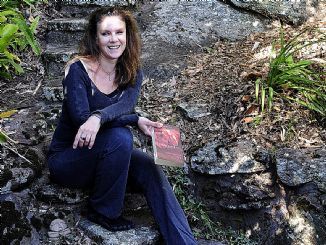
Australian-born author Katerina Cosgrove’s newly released book Bone Ash Sky tells the story of genocide and war from the shores of Lake Van in 1915, through the merciless Syrian deserts, to the welcoming yet war-torn and viciously divided Beirut. It recounts the ordeals of four generations of witnesses, survivors, perpetrators and victims as American journalist Anoush Pakradounian tries to unravel her family’s past and the secrets surrounding her father’s life as a notorious militiaman during the Lebanese civil war. A chilling read, Cosgrove does not spare the reader the gruelling details of the forced marches through Der Ez Zor and the cost of survival.
A must-read, Bone Ash Sky was released on May 1st and is available in all major bookstores. The official book launch will be held on Thursday, May 23 at 8:00pm at Bangarra Mezzanine, Pier 4/5, Hickson Road, Walsh Bay.
In this interview, Cosgrove talks about the journey that led to the writing of Bone Ash Sky.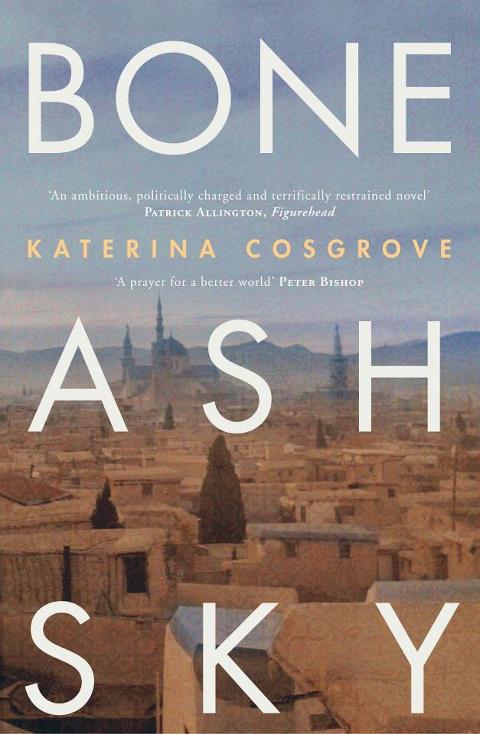 HM: When was the first time you encountered the Armenian Genocide? And why did you decide to write about it?
KC: A Jewish friend of mine, whose grandparents were survivors of the Holocaust, alerted me to the Armenian Genocide back in 2001. He just said it in passing and that was the first time I heard about it. I thought: ‘I have never heard of this Genocide’ and I started reading. Philip Marsden’s book, The Crossing Place, was the first book I read. Then I started delving into all the archival photographs and came across a photo of Turkish gendarmes looking onto severed heads. I was shocked that the Western world knew nothing of this Genocide. There is so much written and filmed on the Holocaust and very little on the Genocide. In 2002, I decided to go to Armenia and Syria and Lebanon and immerse myself. That was the beginning of the journey.
HM: And the civil war in Lebanon? Israeli-Palestinian conflict? How did they make their way into this book?
KC: As a novelist I wanted my characters to move forward and to survive and I knew that a lot of Armenians had ended up in Beirut and Ainjar in Lebanon. Part of the journey was to see what happened to those who did not perish, what happened to the survivors. And that’s when I started getting into the Civil War in Lebanon and of course the Israel-Palestine conflict which loomed so large in that part of the world.
I also feel all these conflicts stem from the same source – the Western powers going in and influencing the way that these cultures and politics move and work together. As a writer I’m constantly looking for connections.
HM: The Armenian community of Lebanon adopted a position of political neutrality during the Lebanese Civil War. Why chose an Armenian militiaman as one of your characters?
KC: As a novelist my aim is not to give a picture of life as it is so much, but as it could be. Also, as a novelist there are ideas of drama and tragedy and structure that come into play. If I was going to write a non-fiction account of Genocide survivors in Lebanon, obviously I wouldn’t have brought in those dramatic elements. As novelists, we tend to take big leeway.
Also, I think the reason behind me creating that character, Selim, is to show that we’re all victims, we’re all perpetrators and when we are traumatised, we tend to act out our trauma. You can see that in Israel as well. They survived the Holocaust, they were the victims and now they’re victimising the Palestinians.
HM: Does it do justice to the memory of the victims when they are portrayed as perpetrators as well?
KC: When I was writing, my focus was being true to the journey of this character. Selim is a character who in him has a lot of conflict and I think that conflict is mirrored in all of us to some extent. I have great compassion for Selim and for my characters. He did the only thing he could do. He’s not a wonderful, beautiful, saintly character. He is not an emblematic character of Armenians either. No, he’s just one fictional character who acted in a certain way.
Again, the overarching theme is to show that there are no victims and no perpetrators. We’re all capable of anything. I don’t know how I would be in a war or genocide. How would I act? I don’t know. I can’t judge. I can’t judge him and I can’t judge the Turks. I can say that there are some things in life that are wrong but I can’t say how I would be in that situation because I haven’t been there, I haven’t had that upbringing, that level of hatred.
On a structural level as well, if Selim had not become a militiaman, there would be no point in Anoush coming back to uncover the secrets.
When I met Ken Hachikian [Chairman of the Armenian National Committee of America] in Australia, he said to me ‘You haven’t written the book that we would have written.’ And I said yes, as a novelist my concern is not so much to memorialise things but to explore extremes. If I was Armenian, maybe I would have written a different novel. I feel such great compassion for what happened. I don’t want to do anything to upset the Armenian audience or show that I’m callous in the face of their suffering. As a fiction writer, however, there are so many constraints that I labour under as well. I am grateful for the opportunity to have found this great story to tell.
HM: The destructive burden of trauma and guilt of survival weighs heavily on many of your characters. How were you able to capture this emotion? Was it through your encounters with Armenians? Or a bit of personal history as well?
KC: It’s a hard question. Part of me doesn’t even know. When I’m writing it’s almost like I’m tapping into some universal consciousness that when I’m not writing, I can’t tap into. It’s almost like I’m in a trance.
However, on a more practical level, having come from a Greek background, we have a long history of conflict with the Turks. On that level I can empathize completely with a whole range of emotions that people feel when they have been wronged. I always felt an affinity with that part of the world. The Ottomans occupied Greece for 400 years so there’s a funny relationship of familiarity but also mistrust. On that level I can tap into what my characters Selim, Anoush, Minas and Lilit were feeling.
On another level, I spoke to lots of Armenians when I was in Armenia. I went to Ainjar and met Armenians there. I went to Turkey and listened to Turks and their side of the story. I tried to synthesise all of that into my characters.
Also, as a writer I think we try to work through emotions that maybe a lot of people try to push under the carpet. Difficult emotions or controversial emotions or upsetting emotions that maybe in regular lives we just try to soldier on and don’t address.
HM: That is very true. As a third generation Armenian sometimes the history becomes very mathematical. Despite the continued feeling of anger and the need for justice to prevail, I tend to think less about the actual trauma. In the same way, there is a lot of academic work on the Armenian Genocide but not that many novels that can explore the suffering in more human terms. What did you see this book becoming and has it become what you wanted it to?
KC: Because it has taken ten years to research and write, this book has gone through many permutations. I’ve grown and changed through it. It has had feedback from a lot of different people in the industry as well. It’s hard for me to even recall what my plans for it were initially. All I knew in the beginning was that I wanted to tell this story that in a sense hasn’t been told. Back then Chris Bohjalian’s book The Sandcastle Girls hadn’t come out; Mark Mustian’s book The Gendarme hadn’t come out yet. The only one I could get my hands on back then was Ararat by D.M. Thomas and for me that was a very unsatisfying book. I felt maybe I can bring something new to this issue.
It’s completely different from what my initial plan was for the book. The characters made themselves known to me and I ran with that. It’s almost like the characters made the book – they imposed themselves on me.
HM: Tell me about your trips to Armenia, Turkey, Lebanon and Syria – your impressions and experiences. How did they shape the book and influence your thinking around the issue?
KC: Turkey was the first foray into it. I’ve been back there three or four times. It was after my visits there that I realised how much of a veil there is over the Genocide and how much it is denied. I was naïve enough at that stage to mention that I was working on a book about the Armenian Genocide to the men who owned the little guesthouse we were staying at in Ephesus. Seeing their faces change and their whole body language change was quite shocking to me. They just didn’t want to hear it. And they were of my generation, they were young.
That spurred me on and I visited Armenia and Syria and Lebanon. I remember being in Armenia and an old man saying to me ‘Thank you for coming to this forgotten land.’ And that really struck me; it really stayed with me that as a citizen of that country he felt that the world had forgotten them. Again, it spurred me on to meet more people. Through an Armenian Australian we tapped into a whole community as soon as we arrived in Armenia. We learned about what happened in Azerbaijan and Nagorno Karabakh and coming into that from Australia was mind-blowing, fascinating – so much history and so much pain as well.
Meeting the Armenian community in Lebanon was very enlightening as well. Syria also struck me deep. That was a very emotional, visceral part of the journey when we went through the desert and we felt the killing, we felt the death – very much I felt it in my body at that stage.
HM: In 2010, you published an article in The Australian arguing Turkey must lift the veil on the Armenian Genocide. There was a strong reaction from Turkish groups to the article. Has there been a similar reaction to the book yet?
KC: Nothing has happened yet. The article did spark things off very quickly. As soon as it was published my Facebook page was hacked into the next day. With the book having come out, the Turkish groups have been very quiet and also the ambassador hasn’t put forward a retracting statement, which is what he did with the article. Nothing has happened yet but I expect that they’re on top of it and will react.
comments
Կոչ Հայութեան ու Հայրենիքի Իշխանութեան
Editorial:1918-2024. The Struggle for Independent, Sovereign Statehood Continues
Armenia Media Updates: 29 March 2023 Edition
Armenia Media Updates: 23 March 2023 Edition
#TogetherForSyria Telethon Raises over $110,000 for Armenians In Syria
10 August 2022: Week to Week by Armenia Media with Shahen Araboghlian
3 July 2022: Week to Week by Armenia Media with Shahen Araboghlian
17 June 2022: Week to Week by Armenia Media with Shahen Araboghlian